The American Welding Society's Welding Automation Exposition and Conference, held in Minneapolis, drew more than 130 end users, integrators and technology developers to compare notes on where robotic welding cells are heading in 2026.
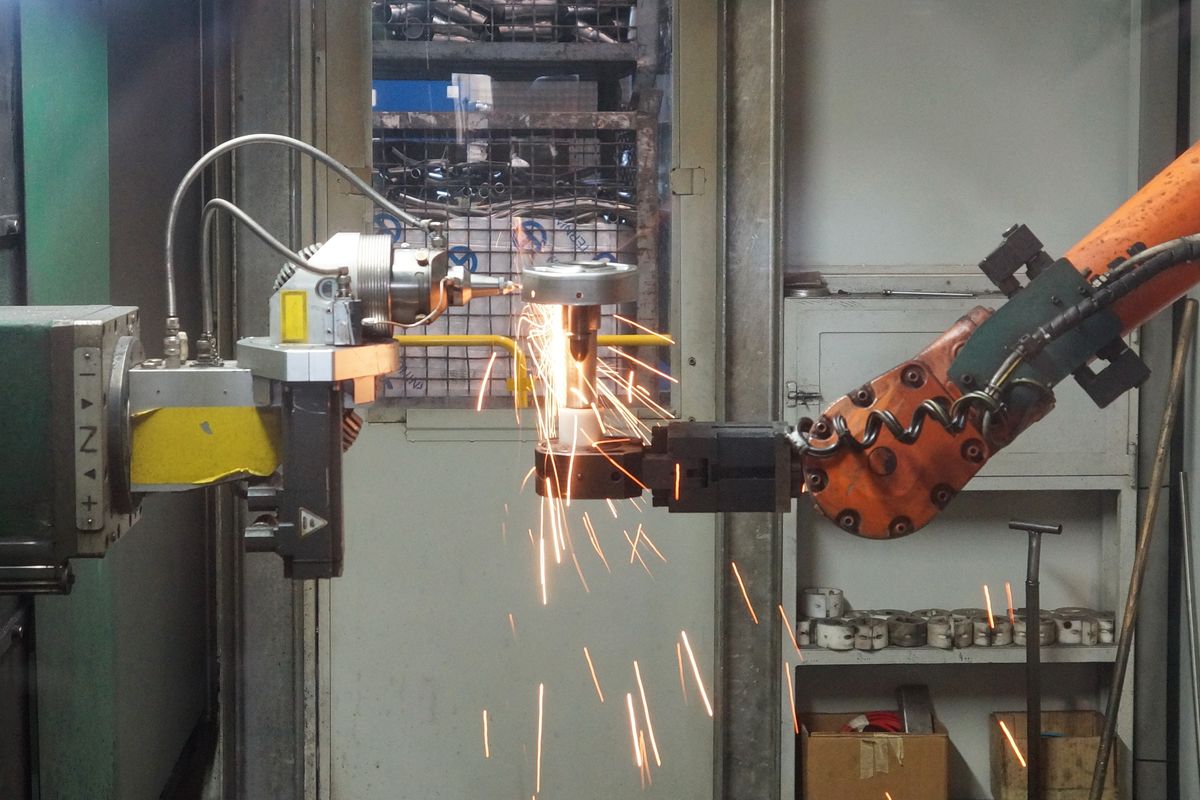
Two mechanical staples of the trade got fresh attention: overhead gantry rigs that mount the robot above the work to free up floor space and reach fixtures on either side of the beam, and servo-controlled positioners now indexing between weld passes in as little as 1.8 seconds — keeping the fusion zone flat or horizontal-vertical through the whole joint.
Layered on top was AI-assisted vision — systems that scan a part, build a 3D point cloud of the joint and plot torch position on the fly — aimed squarely at the low-volume, high-mix work that used to be too fiddly to automate.